
How to Use AI Support Automation Without Losing Human Escalation
A practical guide to AI support automation that keeps approved knowledge boundaries, confidence rules, human handoff, logging, quality review, and privacy in view.
 Sun Cluster Inc.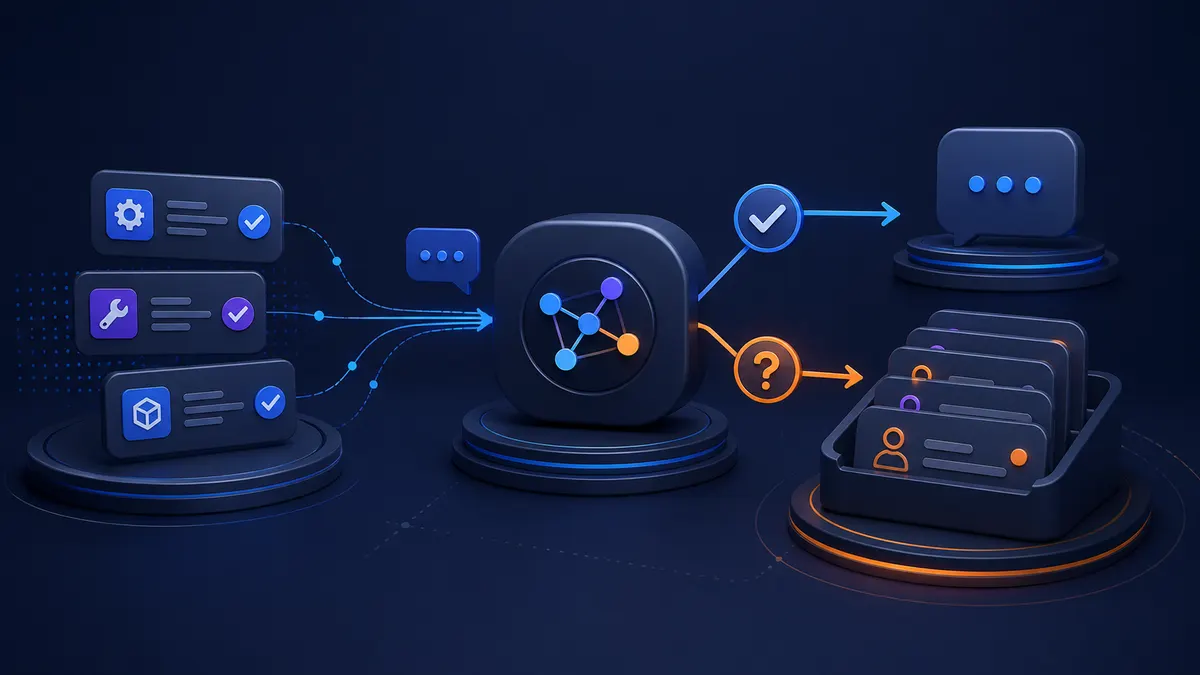
AI support tools should improve how customers find approved information and how staff receive context—not imitate certainty where a human decision is needed.
Start with support jobs
List the questions and requests customers repeat most often. Good candidates have an approved answer, a clear boundary, and a useful next step such as a form, document, or human handoff.
Choose bounded automation candidates
Order-status guidance, opening hours, preparation instructions, and routing requests may be appropriate when the source information is maintained. Do not use automation to make claims the business cannot support.
Keep human-judgement cases visible
Complaints, exceptions, sensitive information, pricing commitments, legal questions, and unusual customer circumstances need an easy escalation route to the right person.
Use approved knowledge boundaries
Define the content sources, update owner, excluded topics, and language the system may use. A smaller maintained knowledge set is more reliable than broad, unreviewed information.
Set confidence and fallback behaviour
When the system cannot answer from approved information, it should say so plainly, collect only necessary context, and offer an appropriate handoff rather than guessing.
Review logs, quality, and privacy
Establish what conversations are retained, who can review them, how recurring failures become improvements, and what personal information should not be collected or exposed.
Review real conversations before expanding automation
Start with a controlled set of approved support topics and review the resulting conversations with the people who handle customer questions. Look for unclear answers, missing context, inappropriate requests for personal information, and handoffs that do not reach the right queue.
Use those findings to improve source content and escalation rules. The purpose is to make an approved customer interaction easier to manage, not to create an assistant that appears certain outside its defined knowledge boundary.
- Approved topics and excluded topics
- Human owner for each escalation type
- Conversation review and retention process
- Path for improving source content
Common questions
Can AI support handle complaints or sensitive requests?
Those requests should have a clear human escalation path. The automation can collect only appropriate context and direct the customer to the responsible person or process.
How should support content be maintained?
Name an owner for the approved source material, review it when policies or services change, and test the customer-facing workflow after meaningful updates.
Discuss your software project
Have a defined workflow, integration, or delivery question? Tell us about the technical constraints and the outcome your team needs to support.
Contact Sun Cluster