
API Integration Project Checklist: What to Prepare Before Development
Prepare an API integration project with source and destination systems, data mapping, triggers, authentication, validation, retries, logging, alerts, and handoff.
 Sun Cluster Inc.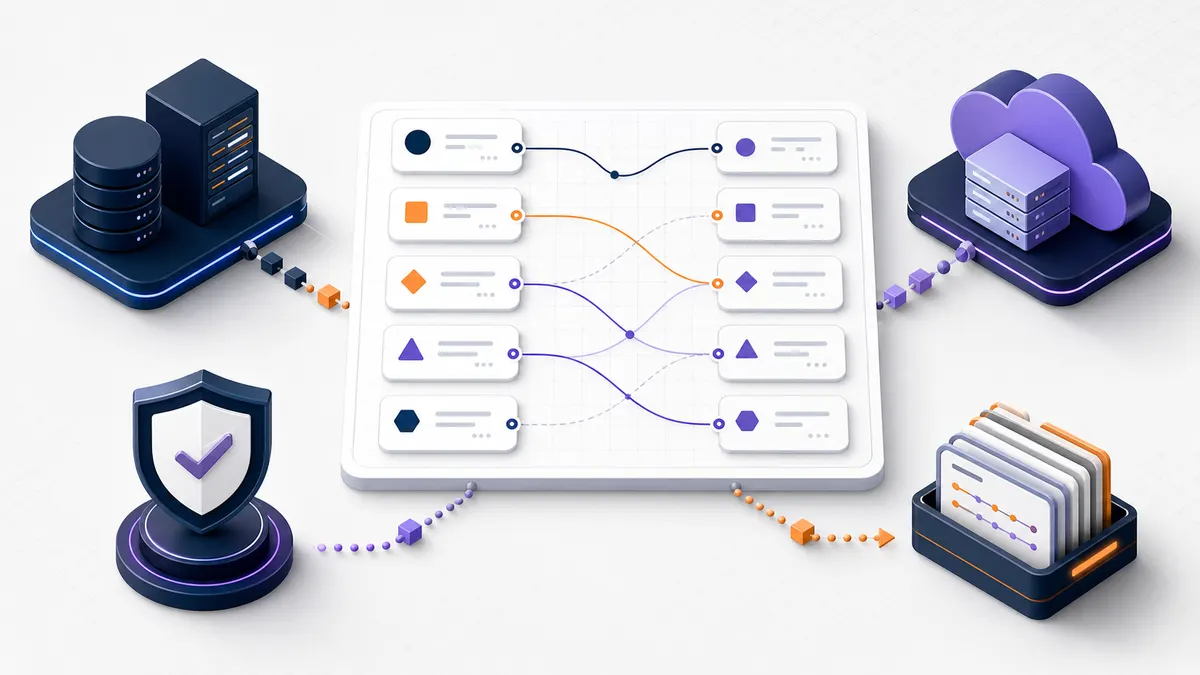
This checklist helps teams prepare for an application-to-application integration without assuming that a connection alone solves the operating workflow.
Name the source and destination systems
Record the product names, account owners, documentation links, environments, API availability, and the business process each system supports.
Describe the data contract
List each field, format, identifier, required value, source of truth, and transformation. Include what happens when data is missing, invalid, or changed after it has been synchronized.
Choose sync direction and triggers
Specify whether data flows one way or both ways, what starts the transfer, the acceptable delay, and how a later correction reaches the other system.
Confirm authentication and permissions
Identify credential ownership, least-privilege scopes, rotation expectations, sandbox access, and the approved location for secrets. Do not pass credentials in documents or unprotected messages.
Define validation and recovery
Set rules for validation, retries, duplicate prevention, error queues, manual correction, and reconciliation. A timeout should not silently become a successful update.
Plan logs, alerts, and handoff
Agree on the event trail, alert recipient, monitoring view, operating documentation, and support owner. A maintained integration is an operational product, not a one-time connection.
Use representative test data before development is complete
Test data should include normal records as well as missing fields, changed records, duplicates, invalid values, and a correction after synchronization. This exposes transformation and recovery requirements before a production workflow is relying on the connection.
Agree which people can review test output and what evidence shows the integration is ready for handoff. A successful demonstration should include the error path and operating record, not only the happy-path request.
- Normal and incomplete source record
- Duplicate and corrected record
- Expected destination result
- Exception and recovery evidence
Common questions
Can an API integration be tested without production credentials?
Often yes, using approved sandbox access, mock data, or a controlled non-production environment. The available approach depends on the systems involved.
What is a data contract?
It is the agreed definition of fields, formats, identifiers, required values, and behaviour when data is missing or changes. It makes the integration boundary testable.
Discuss your software project
Have a defined workflow, integration, or delivery question? Tell us about the technical constraints and the outcome your team needs to support.
Contact Sun Cluster