
Webhooks, Scheduled Sync, or Real-Time API: Choosing an Integration Pattern
Compare webhooks, scheduled synchronization, and direct real-time API requests through latency, reliability, idempotency, reconciliation, and operational complexity.
 Sun Cluster Inc.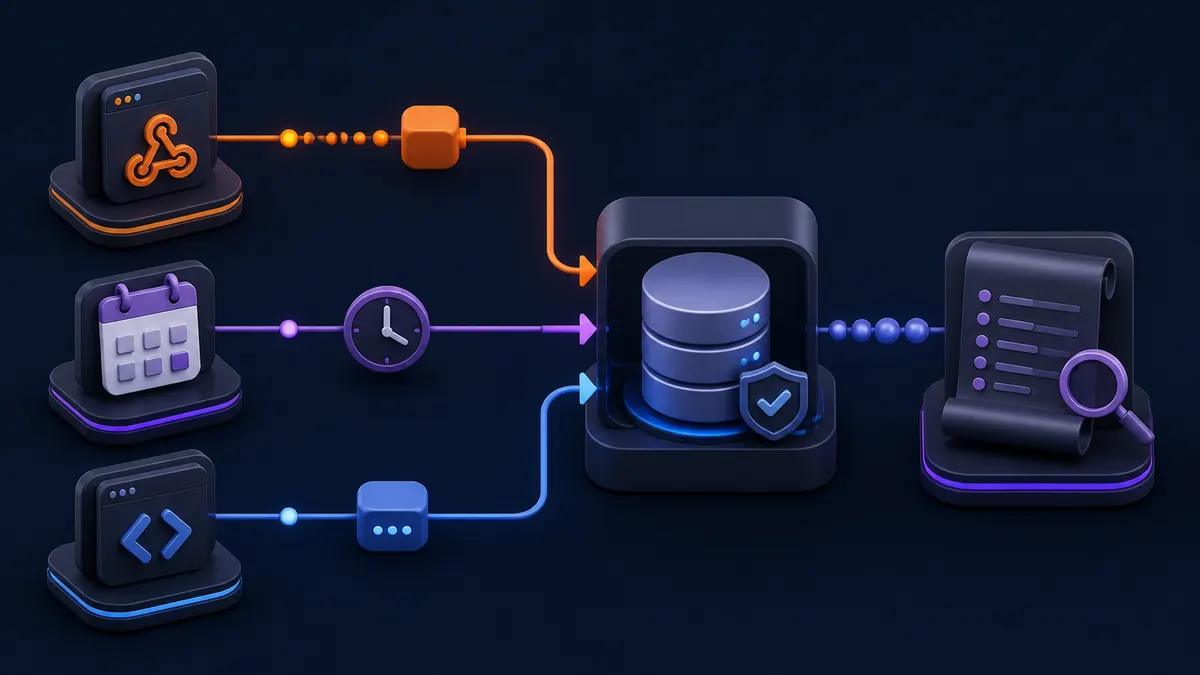
Integration choices shape how a system responds to changes, recovers from missed events, and explains its data. Webhooks, scheduled syncs, and direct requests each solve a different operational problem.
- Source event
- Webhook or schedule
- Validation
- Local state
- Destination action
- Logs and alerts
Compare the three common patterns
Webhooks notify a system when an event happens. Scheduled syncs check for changes at a chosen interval. Direct requests obtain or send information when a user or system needs it. Many reliable systems use more than one.
Set the required latency
Ask how late information can be before it affects the workflow. A nightly report does not need a real-time stream; an approval or availability check may need a faster path.
Use webhooks for event notifications
Webhooks reduce polling and can make an event visible quickly, but delivery can be repeated, delayed, or missed. Verify signatures, store event identifiers, and retain a recovery method.
Use scheduled syncs for controlled reconciliation
Scheduled work is useful when source systems do not emit events, when data changes slowly, or when a regular comparison catches missed updates. Respect source limits and keep jobs observable.
Use direct requests for immediate interaction
A direct request suits actions that need a current response, but callers still need timeouts, validation, and a clear response when the upstream system is unavailable.
Build for replay and reconciliation
Use idempotency or duplicate prevention, durable state, retry rules appropriate to the action, and a way to compare source and destination. These controls matter more than calling a pattern 'real time'.
Write a recovery contract for the chosen pattern
For each flow, document what happens when an event is late, repeated, missing, or rejected. State the identifier used to prevent duplicates, when a retry is allowed, how a source and destination are reconciled, and who reviews an exception.
This recovery contract is often more important than whether a flow is labelled real-time. A controlled scheduled sync can be the right engineering choice when it meets the required timing and gives the team a dependable way to recover.
- Acceptable delay
- Duplicate-prevention identifier
- Retry and timeout rule
- Reconciliation and alert owner
Common questions
Can a scheduled sync be more reliable than a webhook?
For some workflows, yes. A scheduled reconciliation can recover missed events and make timing predictable. The suitable pattern depends on the required latency and recovery needs.
Does real-time mean no delays or failures?
No. Upstream services can be unavailable and events can be delayed. Real-time integrations still need timeouts, records, and recovery behaviour.
Discuss your software project
Have a defined workflow, integration, or delivery question? Tell us about the technical constraints and the outcome your team needs to support.
Contact Sun Cluster