
Custom E-commerce Build or an Established Platform: How to Decide
Compare a custom e-commerce build with established platforms through catalogue complexity, checkout, inventory, integrations, maintenance, and business fit.
 Sun Cluster Inc.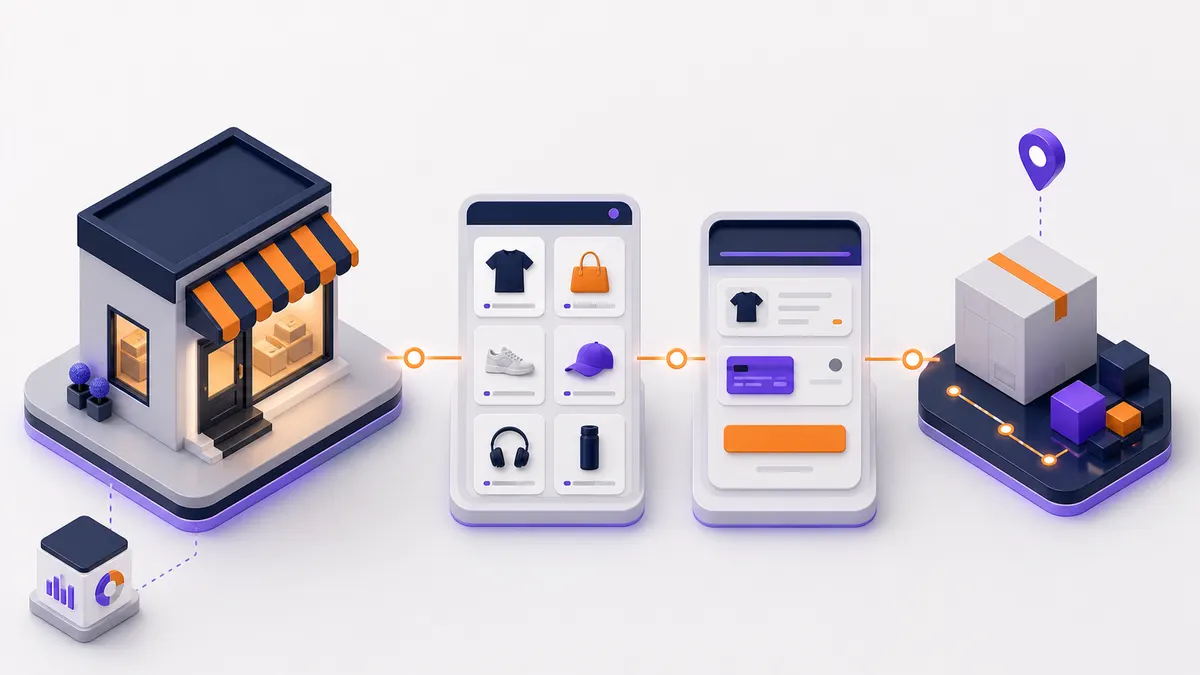
The right e-commerce approach depends on what makes the business unusual. Product structure, account rules, fulfilment, integrations, and post-purchase operations matter as much as the storefront.
Identify what is genuinely unusual
A standard catalogue and checkout may fit an established platform well. Custom work becomes more relevant when pricing, accounts, ordering rules, fulfilment, or customer workflows cannot be represented without fragile workarounds.
Review catalogue and pricing complexity
Document variants, bundles, account-specific visibility, quotes, subscriptions, product data sources, and rules that staff currently apply manually.
Separate checkout from the wider operation
Payments and refunds are only part of the flow. Consider inventory, tax responsibilities, shipping, fulfilment, service follow-up, and the systems that need accurate order information.
Map the integrations
List the CRM, accounting, inventory, warehouse, fulfilment, or support systems that must receive data. Verify capabilities before assuming a platform connector covers a required workflow.
Account for maintenance and ownership
Every option needs updates, security attention, content ownership, and operational support. The relevant comparison is the full operating cost of each approach, not only the first licence or build invoice.
Use a staged decision
Start with the highest-friction customer or operations workflow. An established platform plus a focused custom integration can be a sensible middle path when a complete bespoke build is not yet justified.
Test the operating exceptions, not only the happy path
A storefront can look complete while staff still struggle with partial fulfilment, out-of-stock changes, cancellations, returns, account-specific pricing, or customer-service corrections. Trace these situations through the chosen platform and connected systems before deciding the standard feature set is enough.
A hybrid approach may be suitable when an established storefront handles catalogue and checkout well, but a focused integration or internal workflow is needed around fulfilment, customer accounts, or operational records.
- Cancelled or changed order
- Inventory mismatch
- Return or refund workflow
- Customer-service correction path
Common questions
Does custom e-commerce always mean building checkout from scratch?
No. Custom work may focus on a specific customer or operations workflow while an established platform handles standard storefront and checkout responsibilities.
What should be confirmed before selecting a platform?
Confirm how it handles the business’s catalogue, accounts, fulfilment, integrations, staff workflows, and exception cases—not only its public storefront features.
Discuss your software project
Have a defined workflow, integration, or delivery question? Tell us about the technical constraints and the outcome your team needs to support.
Contact Sun Cluster