
Customer Portal Planning Guide: What to Define Before Development
A pre-development guide for customer portals covering roles, requests, documents, statuses, integrations, notifications, and rollout support.
 Sun Cluster Inc.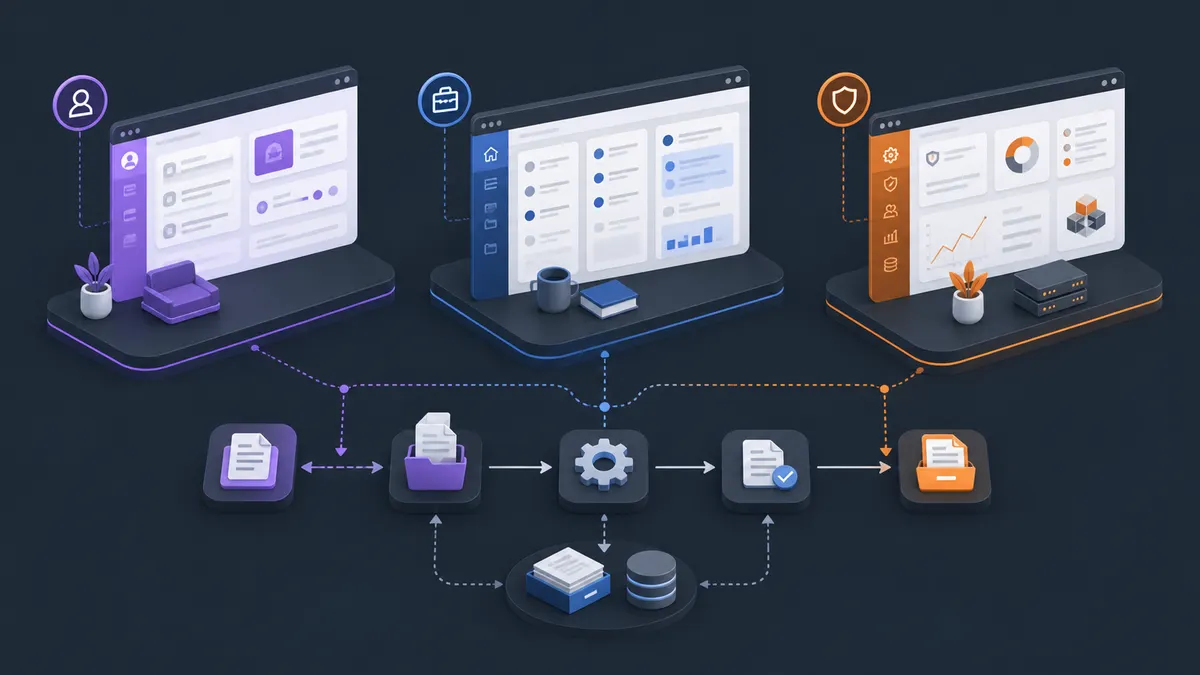
Use this planning guide to describe a customer portal as an operating workflow: who enters, what they need to do, what information they can access, and where the underlying records live.
List users and roles
Name the customer, organization administrator, staff member, manager, and support roles. For each role, define what they can see, submit, change, approve, or download.
Describe customer jobs
Focus on outcomes such as submitting a request, checking a status, accessing an approved file, or updating account information. This keeps the project anchored in useful tasks.
Set document and access rules
Classify documents, retention needs, download permissions, version handling, and the controlled process for staff to replace or withdraw a file.
Map forms, statuses, and notifications
For each request, record required fields, status changes, who is notified, and what happens if information is incomplete. Visible activity history helps reduce avoidable follow-up.
Confirm integrations
Document the systems that own customer records, service status, documents, and communications. Verify available APIs or exports before committing to a portal feature.
Plan rollout and support
Define account migration, invitations, training, support channels, and a gradual launch path. Adoption is part of delivery, not an afterthought after the portal is deployed.
Set ownership boundaries before screen design
For every portal record, identify who creates it, who can view or change it, which external system owns it, and what happens when information is missing or disputed. These decisions are more important than choosing the first dashboard layout.
A portal may serve customers, staff, and administrators differently. Define those roles and the handoff between them so a convenience feature does not accidentally create uncontrolled access or duplicated records.
- Customer, staff, and administrator roles
- System of record for each data type
- Notification and exception ownership
- Access change and account recovery process
Common questions
Should every portal user see the same information?
Usually not. Access should reflect the user’s relationship to the account and the tasks they need to complete. Role rules should be defined before implementation.
Can a portal launch before every integration is ready?
It can, when the first workflow has a reliable source of truth and a clear temporary operating process. Unready integrations should be visible in the scope, not implied.
Discuss your software project
Have a defined workflow, integration, or delivery question? Tell us about the technical constraints and the outcome your team needs to support.
Contact Sun Cluster